
How Many Amps Does a Typical Power Tool Use? A Simple Guide for Buyers and DIY Users

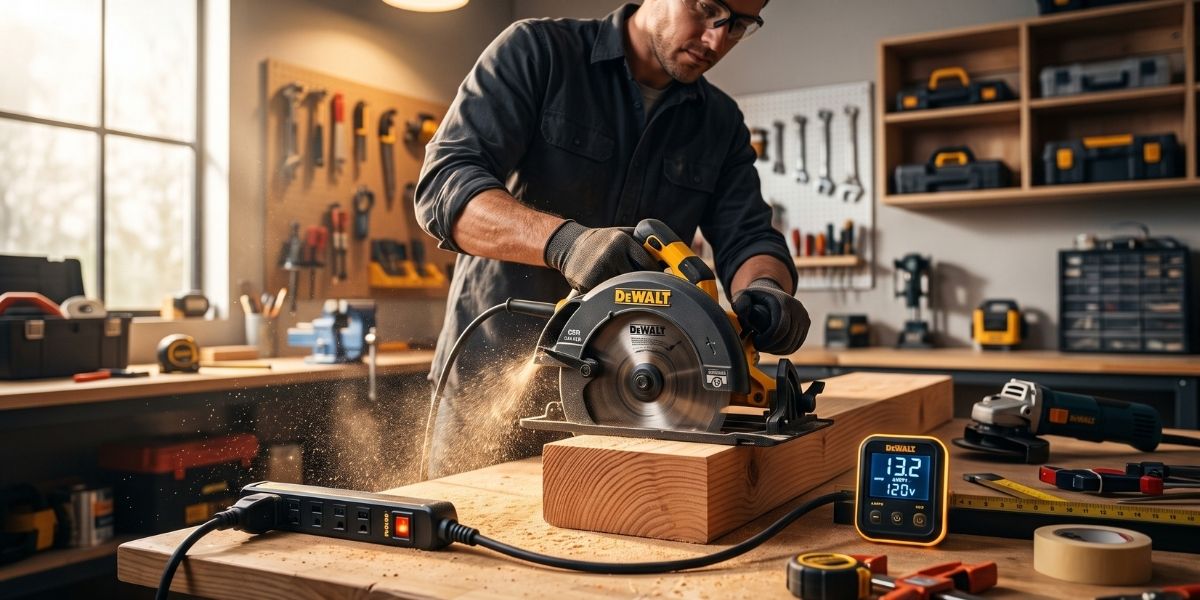
A typical corded power tool usually uses anywhere from 2 amps to 15 amps, depending on the tool type, motor size, workload, and whether the tool is designed for light DIY projects or heavy professional work. Small tools such as sanders, jigsaws, and basic drills often use fewer amps, while circular saws, angle grinders, miter saws, table saws, and other cutting tools usually require more electrical current.
Understanding how many amps a power tool uses is important for more than just comparing tool power. It helps you avoid tripped breakers, overloaded extension cords, overheating motors, weak performance, and unsafe working conditions. A tool that is connected to the wrong circuit or a thin extension cord may still turn on, but it may not run properly under load. In some cases, the tool can overheat, lose cutting power, or trip the breaker repeatedly.
Amp rating matters most when you are talking about corded power tools. Corded tools plug directly into a wall outlet, so their electrical demand is often shown in amps. Cordless tools are different. They are usually compared by battery voltage, such as 12V, 18V, 20V, 24V, or 40V, and by battery capacity, measured in amp-hours or Ah. That does not mean cordless tools do not use current. They do, but the way their power is measured and marketed is different.
For most homeowners, DIY users, and even many workshop users, the main thing to remember is simple: low-power tools may use only a few amps, but larger cutting, grinding, and stationary tools can use close to the full capacity of a standard household circuit. That is why checking the amp rating before using a tool is a smart habit.
How Many Amps Does a Typical Power Tool Use?
There is no single amp number that applies to every power tool. A small finish sander and a full-size table saw are both power tools, but they do not use the same amount of current. The amp rating depends on the type of motor, tool size, job difficulty, material being worked on, and how much load the tool is under during use.
As a general guide, light-duty power tools often use around 2 to 5 amps. These include many small sanders, compact drills, rotary tools, and light jigsaws. Medium-duty tools usually use around 5 to 10 amps. This range includes many stronger drills, jigsaws, routers, belt sanders, and smaller grinders. Heavy-duty tools commonly use around 10 to 15 amps. Circular saws, miter saws, table saws, large angle grinders, and powerful routers often fall into this range.
The amp number printed on a corded power tool is usually the maximum current the motor is designed to draw under normal operating load. However, the tool may not pull that full amount every second it is running. For example, a circular saw may draw less current when spinning freely in the air, but it can pull much more current when cutting through thick lumber.
Startup current can also be higher than normal running current. When a motor first starts, it may briefly pull extra current to get the blade, bit, belt, or disc moving. This short surge is one reason a tool may sometimes trip a breaker when it starts, especially if other devices are already running on the same circuit.
Average Amp Usage by Common Power Tool Type
Different power tools use different amp ranges because they perform different jobs. Tools that only remove a small amount of material usually need less power. Tools that cut, grind, rip, or shape dense material need more power because the motor must keep moving under resistance.
Electric Drills
A typical corded electric drill usually uses around 3 to 8 amps. Smaller household drills often fall near the lower end of this range. They are suitable for drilling small holes, assembling furniture, driving screws, and handling basic home repair tasks.
Heavy-duty corded drills, hammer drills, and professional-grade drills may use more current. These tools are built for tougher materials, larger bits, and longer DEWALT 20V MAX 6-1/2 in. Brushless Cordless periods of work. For example, drilling into wood may not require much current, but drilling into masonry or thick metal can place much more strain on the motor.
A higher-amp drill may feel stronger under load, especially when using larger bits. However, for simple household tasks, a very high amp drill is not always necessary. The right drill depends on the work you do most often.
Circular Saws
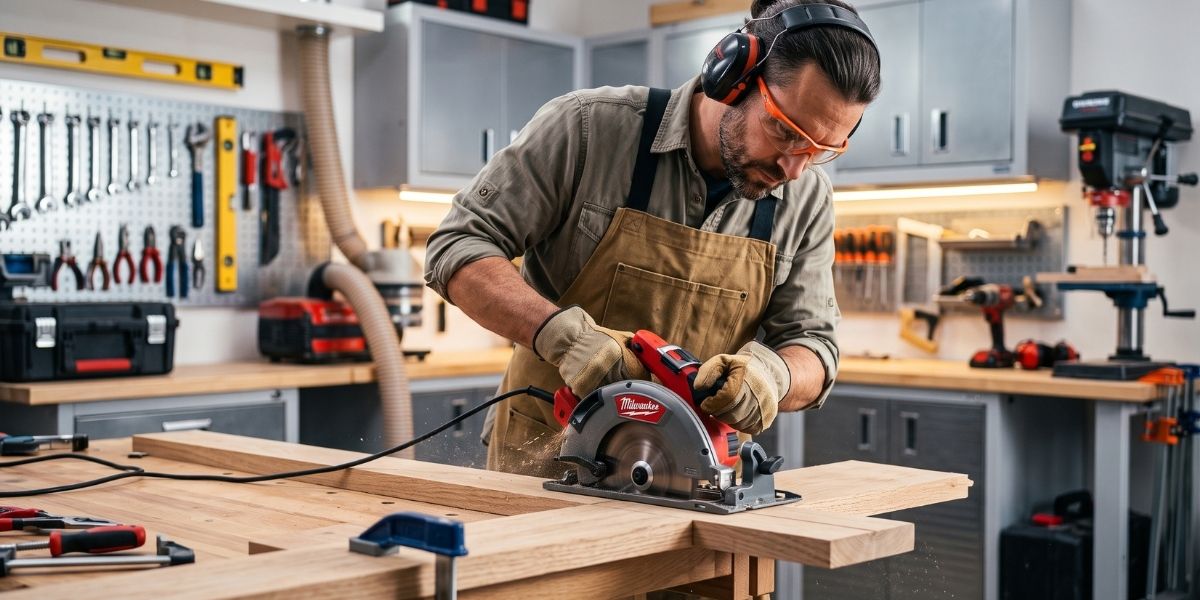
Circular saws usually use around 10 to 15 amps. Many full-size corded circular saws are rated close to 15 amps because cutting lumber and sheet goods requires a strong motor. The blade must maintain speed while moving through wood, plywood, framing lumber, or other building materials.
A lower-powered saw may work fine for light cuts, but it can slow down when cutting thicker or harder material. When a saw slows down too much, the cut becomes rougher, the motor works harder, and the blade may heat up faster. This is why many users prefer a 15-amp circular saw for regular construction, carpentry, or remodeling work.
Circular saws are also one of the tools most likely to trip a breaker if used on an overloaded circuit. If a 15-amp saw is running on a 15-amp household circuit, there may not be much room left for other devices on the same circuit.
Jigsaws
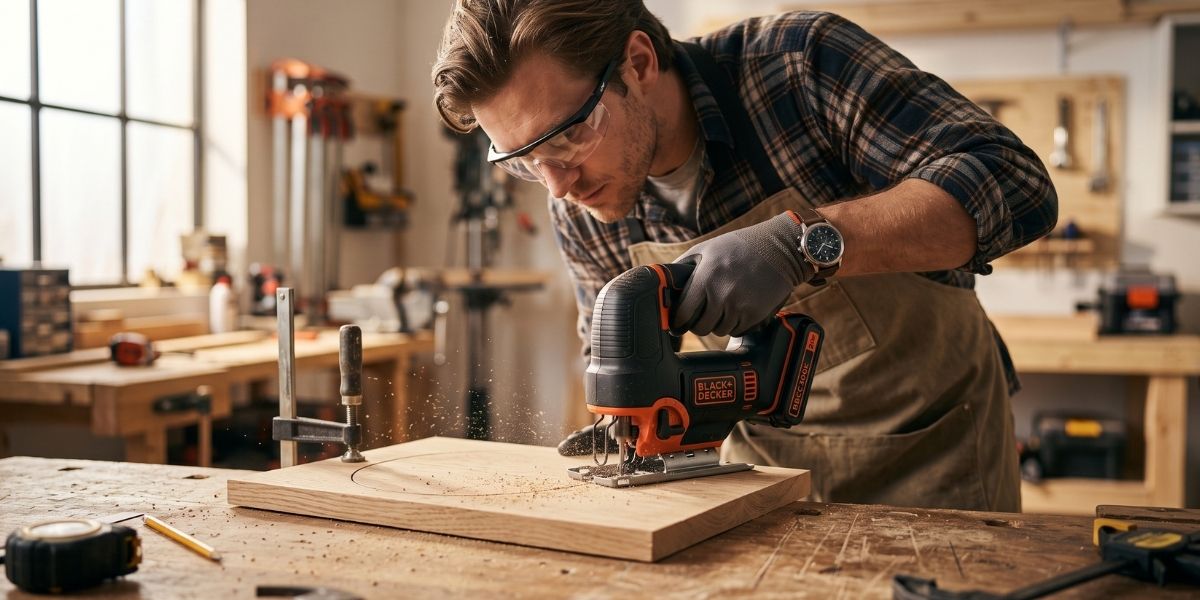
Corded jigsaws typically use around 4 to 7 amps. A jigsaw does not usually need as much power as a circular saw because it uses a narrow reciprocating blade and is often used for curved, detailed, or controlled cuts.
Lower-amp jigsaws can work well for thin wood, light plastic, craft projects, and occasional home use. Higher-amp jigsaws are better for thicker wood, denser materials, and more frequent use. If you cut hardwood, laminate, or thin metal, a stronger jigsaw can help maintain blade speed and reduce stalling.
Blade choice also affects performance. Even a higher-amp jigsaw can perform poorly if the wrong blade is used. A fine-tooth blade, coarse blade, metal blade, or wood blade each has a specific purpose. The motor amp rating matters, but the blade and cutting technique matter too.
Angle Grinders
Angle grinders can vary widely in power. A typical angle grinder may use around 6 to 15 amps, depending on size and design. Smaller grinders used for light grinding, sharpening, or cutting thin metal may use less current. Larger grinders used for heavy metalwork, masonry cutting, or long grinding sessions can draw much more.
Angle grinders work hard because they spin abrasive discs at high speed. When grinding metal or cutting through tough material, the motor has to keep the disc moving while facing strong resistance. If the grinder is pushed too hard, the motor may slow down and draw more current.
Because grinders can be demanding tools, they should be used with properly rated outlets and extension cords. A thin or overly long cord can cause voltage drop, poor performance, and extra heat. This is especially important when using a grinder outdoors, in a garage, or on a jobsite.
Sanders
Many sanders use around 2 to 6 amps, although the exact range depends on the type of sander. Random orbital sanders and sheet sanders are usually lower-amp tools because they are designed for surface finishing rather than aggressive material removal.
Belt sanders often use more amps because they remove material quickly. A belt sander has to move a sanding belt continuously while pressing against wood or another surface. This takes more motor strength than light finishing work.
For sanding, more amps can help when removing paint, smoothing rough boards, or leveling uneven surfaces. However, for final finishing, control is often more important than raw power. A light sander with the right sandpaper can produce better results than a powerful tool used too aggressively.
Miter Saws and Table Saws
Miter saws and table saws commonly use around 12 to 15 amps. These are high-demand tools because they cut wood with large blades and powerful motors. A miter saw is often used for crosscuts, trim, framing, and angled cuts. A table saw is used for ripping boards, cutting sheet goods, and handling heavier woodworking tasks.
Many portable table saws and jobsite miter saws are designed to run on standard household circuits, but they still use a lot of current. A 15-amp table saw on a 15-amp circuit may run properly when used alone, but adding a shop vacuum or dust collector on the same circuit can cause the breaker to trip.
Stationary saws should always be used with properly rated cords, outlets, and circuits. If a saw repeatedly trips a breaker, it is better to reduce the electrical load or use a different circuit instead of forcing the tool to continue running.
What Does Amp Rating Mean on a Power Tool?
Amps measure electrical current. In simple terms, amps tell you how much current the tool can draw from the electrical supply. A higher amp rating usually means the motor is designed to pull more current to produce more power under load.
However, amps do not tell the whole story. A 10-amp tool is not automatically better than an 8-amp tool in every situation. Tool performance also depends on motor design, efficiency, gearing, torque, speed control, blade quality, build quality, cooling, and how well the tool is matched to the job.
For example, a well-designed 7-amp jigsaw with the right blade may cut cleaner than a poorly designed higher-amp model. A sharp circular saw blade can make a saw feel more powerful because the motor does not have to fight a dull blade. Good tool design can make a big difference.
Amp rating is useful because it tells you how much electrical demand the tool may place on your circuit. It also gives a general idea of motor strength, especially when comparing similar corded tools in the same category. But it should not be the only factor you use when choosing a power tool.
Corded vs Cordless Power Tools: Do Amps Matter?
Amps are most commonly used when comparing corded power tools. If a tool plugs into a wall outlet, the manufacturer often lists its power demand in amps. This helps users understand how much current the tool may draw from the circuit.
Cordless tools are usually described differently. Instead of corded amp ratings, cordless tools are commonly compared by voltage and battery capacity. Voltage may be listed as 12V, 18V, 20V, 24V, 40V, or another battery platform. Battery capacity is usually shown in amp-hours, such as 2.0Ah, 4.0Ah, 5.0Ah, or 8.0Ah.
Battery amp-hours are not the same thing as a corded tool’s amp draw. Amp-hours describe how much energy capacity the battery can provide over time. A larger Ah battery usually gives longer runtime and may support better performance in demanding tools, but it does not directly match a corded amp rating.
Cordless tools can still pull high current from the battery during demanding work. For example, a cordless circular saw cutting thick lumber or a cordless grinder cutting metal may draw a lot of current from the battery pack. That is why high-demand cordless tools often perform better with larger batteries designed for higher output.
For buyers, the simple rule is this: compare corded tools mainly by amps, and compare cordless tools mainly by voltage, battery capacity, battery platform, motor type, and real-world performance.
How Many Power Tools Can You Run on One Circuit?
Many household circuits are rated for 15 amps or 20 amps. This does not mean you should always use the full capacity continuously without thinking. A single high-powered saw, grinder, or table saw can use most of the available current on a 15-amp circuit.
If you run multiple tools or devices on the same circuit, the combined load can trip the breaker. For example, a 15-amp circular saw may work fine by itself. But if a shop vacuum, battery charger, work light, air compressor, or dust collector is running on the same circuit, the total current demand may become too high.
This is common in garages, basements, workshops, and jobsites. Several outlets may look separate, but they may still be connected to the same breaker. If a breaker trips when you use a power tool, it may not mean the tool is defective. It may simply mean the circuit is overloaded.
Before running high-amp tools, check the tool label, the circuit rating, and the extension cord rating. Try to avoid using multiple high-powered devices on the same circuit at the same time. If you use power tools often, it may be worth organizing your workspace so heavy-demand tools have access to a suitable circuit.
Why Do Power Tools Trip Breakers?
Power tools can trip breakers for several reasons. The most common reason is that the tool draws more current than the circuit can safely handle. This may happen when a high-amp tool is used on a circuit that already has other devices running.
Another common reason is overload during use. A saw cutting thick material, a drill using a large bit, or a grinder pressed too hard into metal can all draw more current. When the motor struggles, it may pull extra current and trip the breaker.
Extension cords can also cause problems. A cord that is too long or too thin can create voltage drop. When voltage drops, the motor may work harder, heat up, and perform poorly. This can increase the chance of tripping a breaker or damaging the tool over time.
Sometimes the issue may be with the tool itself. Worn brushes, damaged wiring, failing motors, or internal shorts can cause abnormal current draw. If a tool trips breakers repeatedly even when used correctly on a suitable circuit, it should be inspected or repaired.
Repeated breaker trips should never be ignored. A breaker is a safety device. It trips because the circuit is drawing too much current or because there may be a fault. Instead of resetting the breaker again and again, reduce the load, check the tool, use the correct cord, or move to a properly rated circuit.
How Extension Cords Affect Power Tool Amp Usage
An extension cord does not change the amp rating printed on a tool. A 15-amp circular saw is still a 15-amp circular saw. However, the wrong extension cord can affect how well the tool receives power.
The main problem is voltage drop. Voltage drop happens when electricity travels through a cord and loses some voltage along the way. The longer and thinner the cord, the greater the voltage drop can be. When a motor receives lower voltage, it may draw more current, run hotter, and lose power.
This is why high-amp tools need heavier-gauge extension cords. A small indoor cord may be fine for a lamp or charger, but it may be unsafe for a circular saw, table saw, grinder, or heavy-duty drill. Using the wrong cord can make the tool feel weak and can also create heat in the cord.
Long cords should be avoided when using high-power tools. If you must use a long cord, choose one with the proper gauge and rating for the tool’s amp draw. Outdoor tools should also be used with cords rated for outdoor use.
A good habit is to check the cord before every use. Look for cuts, loose plugs, heat damage, or crushed areas. A damaged extension cord should not be used with power tools.
Is a Higher Amp Power Tool Always Better?
A higher amp power tool is not always better. Higher amps can be useful for demanding jobs because the tool may have more power available under load. But who makes flex power tools more amps can also mean more weight, more heat, higher power demand, and a higher price.
For a light DIY user, the highest amp tool may not be necessary. If you only drill small holes, sand small projects, or make occasional cuts, a lighter and easier-to-control tool may be the better choice. A powerful tool that is too heavy or difficult to manage can make simple work harder.
For professional users, higher amp ratings can be valuable. A contractor, carpenter, metalworker, or remodeler may use tools for long periods and under heavier loads. In that case, a stronger motor can help maintain performance and durability.
The best tool is the one that matches the work. For cutting thick lumber every day, a 15-amp circular saw makes sense. For light home repairs, a smaller drill or sander may be more practical. Amp rating should be considered along with comfort, build quality, safety features, speed control, and accessory compatibility.
How to Check How Many Amps Your Power Tool Uses
The easiest way to check how many amps your power tool uses is to look at the tool’s nameplate or label. This label is usually found on the body of the tool and may list voltage, amps, watts, model number, and other safety information.
You can also check the user manual. The manual often includes electrical specifications and safety recommendations. If you do not have the manual, the manufacturer’s product page may list the amp rating.
Some tools may show watts instead of amps. In that case, you can estimate amps with a simple formula:
Amps = Watts ÷ Volts
For example, if a tool is rated at 1,200 watts and is used on a 120-volt outlet, the calculation would be:
1,200 ÷ 120 = 10 amps
So, a 1,200-watt tool on a 120V outlet uses about 10 amps.
Actual amp draw can still vary depending on workload. A tool running freely may use less current, while the same tool working hard may draw more. That is why amp ratings should be treated as a guide for safe use, not as an exact second-by-second measurement.
Safety Tips When Using High-Amp Power Tools
Using high-amp power tools safely starts with knowing your circuit and your tool. If a tool is rated close to 15 amps, avoid using it on a circuit that already has several other devices running. A saw, shop vacuum, charger, and work light may be too much for one circuit.
Use properly rated extension cords. This is one of the most important safety steps. A thin cord can overheat or cause the tool to run poorly. For high-power tools, use a heavy-duty cord that matches the tool’s amp rating and the length needed.
Keep blades, bits, sanding belts, and grinding discs in good condition. Dull accessories make the motor work harder. A dull saw blade can increase heat, slow the motor, burn wood, and raise the electrical load. Sharp accessories help the tool work more efficiently.
Do not ignore warning signs. If a tool smells like burning, becomes unusually hot, makes strange noises, sparks heavily, or trips breakers repeatedly, stop using it and check the cause. Continuing to use a struggling tool can damage the motor or create a safety risk.
Unplug corded tools before changing blades, bits, discs, belts, or accessories. Even if the switch is off, unplugging the tool adds an extra layer of safety. This is a simple habit that can prevent serious accidents.
Also make sure your work area is dry, stable, and clear. Electricity and moisture are a dangerous combination. When working outdoors or in damp areas, use proper safety protection and follow the tool manufacturer’s instructions.
Quick Amp Rating Chart for Common Power Tools
The table below gives a simple overview of common amp ranges for popular corded power tools. These are general ranges, and actual ratings may vary by brand, model, and tool size.
| Power Tool | Typical Amp Range | Common Use |
|---|---|---|
| Drill | 3–8 amps | Drilling holes, driving fasteners |
| Jigsaw | 4–7 amps | Curved and detailed cuts |
| Sander | 2–6 amps | Surface finishing |
| Circular Saw | 10–15 amps | Cutting lumber and sheet goods |
| Angle Grinder | 6–15 amps | Grinding and cutting metal |
| Miter Saw | 12–15 amps | Crosscuts and angled cuts |
| Table Saw | 13–15 amps | Heavy wood cutting |
| Belt Sander | 6–10 amps | Fast material removal |
This chart is helpful when planning your workspace or choosing a tool. For example, if you are buying a circular saw or table saw, you should expect it to be a higher-amp tool. If you are buying a small sander, the amp rating will usually be much lower.
Practical Examples of Power Tool Amp Use
To make amp ratings easier to understand, imagine a simple home workshop. You plug in a 5-amp sander and use it on a 15-amp circuit. That tool is using only part of the circuit’s capacity, so there is usually enough room for a light or small charger.
Now imagine using a 15-amp circular saw on that same circuit. The saw may use nearly the full circuit capacity when cutting. If a shop vacuum is also running, the breaker may trip. This does not always mean anything is wrong with the saw. It simply means the total load may be too high.
Another example is a belt sander. A 7-amp belt sander may run smoothly when used lightly, but if you press down hard, the motor has to work harder. That extra strain can increase current draw and heat. Letting the tool do the work is safer and usually gives better results.
For drills, the material matters. Drilling a small hole in softwood is easy. Drilling a large hole through thick hardwood, metal, or masonry requires more torque and more current. That is why the same drill can feel powerful in one job and weak in another.
Why Workload Changes Amp Draw
A power tool’s amp rating is not always the exact amount of current it uses at every moment. The actual current draw changes with workload. When the tool is under light load, it may draw less. When it is under heavy load, it may draw more.
This is easy to understand with a saw. When the blade spins freely, there is little resistance. When the blade enters thick wood, the motor must work harder to keep the blade spinning. That extra work requires more current.
The same thing happens with grinders, drills, routers, and sanders. If the tool is pushed too aggressively, the motor slows down and draws more current. This can create heat and reduce tool life.
Good technique helps reduce unnecessary strain. Use sharp blades, let the tool reach full speed before cutting, do not force the tool, and choose the correct accessory for the material. These habits improve performance and safety.
Amps, Watts, and Volts: What Is the Difference?
Amps, watts, and volts are related, but they do not mean the same thing. Volts describe electrical pressure. Amps describe electrical current. Watts describe power.
A simple way to remember it is:
Watts = Volts × Amps
This formula is useful when a tool lists watts instead of amps. If you know the watts and volts, you can estimate amps. If you know amps and volts, you can estimate watts.
For example, a 10-amp tool on a 120V outlet uses about 1,200 watts:
120 × 10 = 1,200 watts
A 15-amp tool on a 120V outlet uses about 1,800 watts:
120 × 15 = 1,800 watts
These numbers are helpful when planning circuit load. If you are running multiple tools or devices, their combined power demand matters.
Choosing the Right Amp Rating for Your Needs
The right amp rating depends on your work. For basic home tasks, you may not need the most powerful tool available. A moderate-amp drill, jigsaw, or sander can handle many common projects.
For woodworking, construction, and metalwork, higher amp tools may be more useful. Cutting thick boards, grinding steel, or running a table saw requires more motor strength. In these cases, a higher amp rating can help the tool maintain speed and reduce stalling.
However, do not choose a tool by amps alone. Comfort matters. Weight matters. Safety features matter. A tool that is too heavy or uncomfortable may be harder to control. For beginners, control and safety are just as important as power.
A good buying approach is to ask yourself what material you will work with, how often you will use the tool, and whether you need portability or maximum strength. Then compare amp rating along with reviews, brand reputation, warranty, and real-world performance.
Final Thoughts
Most typical corded power tools use between 2 and 15 amps. Smaller tools like sanders, basic drills, and jigsaws usually use fewer amps. Larger cutting and grinding tools like circular saws, angle grinders, miter saws, and table saws often require much more current.
Amp rating is important because it helps you understand how much electrical demand a tool places on your circuit. It can also help you choose the right extension cord, avoid tripped breakers, and prevent overheating or poor performance.
Still, amps are only one part of the picture. A good power tool also depends on motor design, build quality, accessories, speed control, cooling, and how well it matches your work. A higher amp tool can be better for heavy-duty jobs, but it is not always necessary for light DIY use.
Before using any power tool, check the tool label, user manual, manufacturer instructions, circuit rating, and extension cord rating. A few seconds of checking can prevent frustration, tool damage, and unsafe conditions.
FAQs
How many amps does a power drill use?
Most corded power drills use around 3 to 8 amps, depending on the size, motor strength, and purpose of the drill. A light household drill may use fewer amps, while a heavy-duty drill or hammer drill may use more.
Is 15 amps a lot for a power tool?
Yes, 15 amps is considered high for a standard household power tool. Many full-size circular saws, miter saws, table saws, and heavy-duty grinders are rated around 15 amps. These tools should be used carefully on properly rated circuits.
Can I run a 15-amp tool on a 15-amp circuit?
Usually, yes, but the tool may use most of the circuit’s capacity. Avoid running other high-power devices on the same circuit at the same time. If the breaker trips, reduce the load or use another suitable circuit.
Do cordless power tools use amps?
Yes, cordless power tools use current from the battery, but they are usually marketed by voltage and battery amp-hours instead of corded amp ratings. Battery amp-hours describe battery capacity and runtime, not the same thing as a corded tool’s amp draw.
How do I calculate amps from watts?
Use this formula: Amps = Watts ÷ Volts. For example, a 1,200-watt tool on a 120-volt outlet uses about 10 amps because 1,200 divided by 120 equals 10.
Why does my power tool trip the breaker?
A power tool may trip the breaker because the circuit is overloaded, the tool is under heavy strain, the extension cord is too thin or too long, or the tool has an electrical problem. Repeated breaker trips should not be ignored.
Does a higher amp tool mean more power?
Usually, a higher amp rating means the tool can draw more current and may have more power under load. However, amps do not tell the full story. Motor efficiency, tool design, blade quality, torque, and build quality also affect performance.
What amp rating is best for DIY use?
For light DIY use, many tools in the 3 to 8 amp range are enough. For heavier cutting, grinding, or woodworking, tools in the 10 to 15 amp range may be better. The best choice depends on the material, workload, and how often you use the tool.
Can an extension cord make a power tool weaker?
Yes, the wrong extension cord can make a power tool perform poorly. A cord that is too thin or too long can cause voltage drop, which may make the motor run hotter and weaker. High-amp tools need properly rated heavy-duty extension cords.
Should I worry if my tool gets hot?
Some warmth is normal during use, but excessive heat is a warning sign. If the tool becomes unusually hot, smells like burning, slows down often, or trips the breaker, stop using it and check the tool, cord, circuit, and workload.