
Baby Diapers Wholesale: Complete Buying Guide for Bulk Diapers at the Best Price

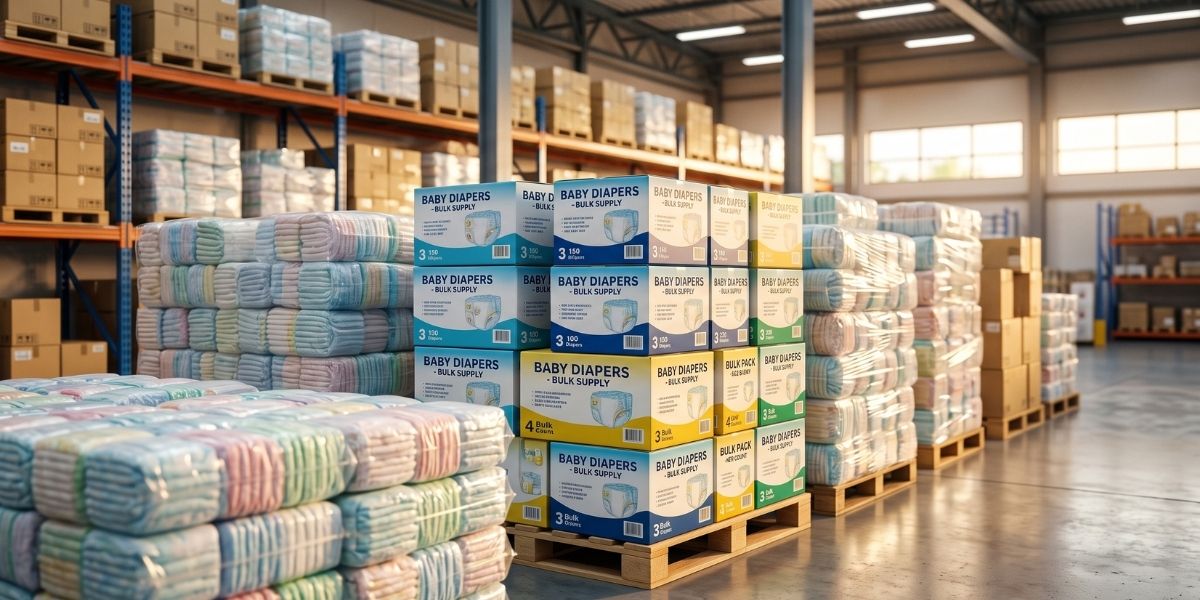
Baby diapers wholesale means purchasing disposable or reusable baby diapers in bulk quantities from manufacturers, distributors, wholesalers, importers, liquidation suppliers, or other bulk inventory sellers at a lower per-unit price. Instead of buying a few small packs at retail price, wholesale buyers purchase larger quantities such as cartons, cases, bundles, pallets, or even container-load orders.
This buying method is popular among baby-product retailers, supermarkets, pharmacies, online sellers, daycare suppliers, exporters, importers, and resellers because diapers are a repeat-purchase product. Parents need diapers every day, which creates steady demand in many markets. When a business can buy diapers at a lower cost and sell them at a competitive retail price, it has a better chance of building strong margins and repeat customers.
The main benefits of buying baby diapers wholesale include lower unit cost, better profit potential, steady inventory, and access to different brands, sizes, and product types. However, buying wholesale is not only about finding the cheapest price. Buyers also need to check quality, supplier reliability, shipping cost, minimum order quantity, packaging condition, safety documents, and resale demand.
This guide explains what baby diapers wholesale means, who buys diapers in bulk, what types and sizes are available, how wholesale pricing works, where to find suppliers, how to check quality, and how to resell diapers for profit.
What Is Baby Diapers Wholesale?
Baby diapers wholesale is the process of buying diapers in large quantities at a discounted price. Wholesale buyers usually purchase directly from manufacturers, distributors, importers, large wholesalers, liquidation companies, or bulk product suppliers. The goal is to reduce the cost per diaper so the buyer can resell the product, use it for a business, or distribute it in large volume.
Wholesale purchasing is different from regular retail purchasing. A retail customer may buy one or two packs of diapers from a store for personal use. A wholesale buyer purchases many packs, cases, or pallets at once. Because the order is larger, the supplier can usually offer a lower price per diaper.
Common wholesale packaging options include cartons, cases, bundles, pallets, and container-load orders. A small retailer may start with a few cases. A larger distributor may purchase several pallets. An importer may order full containers from overseas manufacturers.
Wholesale inventory may include branded diapers, private-label diapers, generic diapers, overstock diapers, liquidation diapers, or closeout diapers. Each type has advantages and risks. Branded diapers may sell faster because customers already know the name. Generic diapers may cost less and appeal to budget-conscious families. Private-label diapers may offer higher margins for businesses that want to build their own brand.
In most cases, prices decrease as order quantities increase. However, the lowest case price is not always the best deal. Buyers must calculate the full landed cost, including product price, shipping, customs, taxes, storage, and any marketplace or delivery expenses.
Who Buys Baby Diapers Wholesale?
Many types of businesses and organizations buy baby diapers wholesale. The most common buyers include baby-product retailers, supermarkets, pharmacies, convenience stores, e-commerce sellers, Amazon sellers, marketplace sellers, exporters, importers, daycare centers, nonprofits, relief organizations, and wholesale distributors.
Retail stores buy wholesale diapers so they can keep regular stock on shelves. Diapers are an essential baby-care item, so stores that serve families often need a reliable supply. Supermarkets and pharmacies also carry diapers because parents often buy them along with groceries, medicine, baby wipes, formula, and other household products.
Online sellers buy diapers wholesale to sell through their own websites, social media shops, Facebook Marketplace, and e-commerce platforms. Since diapers are bulky and used frequently, some online sellers also offer local delivery or subscription plans.
Daycare centers may buy diapers in bulk because they use many diapers every week. Nonprofits and relief organizations may purchase wholesale diapers for donation programs, emergency aid, shelters, or family support projects.
Wholesale distributors buy in even larger volumes and then resell to smaller shops. Importers may purchase from overseas manufacturers and distribute products in their local market.
Bulk buying can improve business margins when there is steady demand. However, buyers need to understand their customer base before placing large orders. A store in one area may sell more newborn and size 1 diapers, while another area may sell more size 4, size 5, or toddler diaper pants.
Types of Baby Diapers Available Wholesale
There are several types of baby diapers available in the wholesale market. Choosing the right product type is important because each customer group may have different needs.
Disposable Baby Diapers
Disposable baby diapers are the most common diaper type in many markets. They are designed for one-time use and are popular because they are convenient, absorbent, easy to carry, and simple to dispose of after use.
For retailers and resellers, disposable diapers are often easier to sell because most parents are already familiar with them. They come in many sizes, pack counts, absorbency levels, and price ranges. Wholesale disposable diapers may include premium brands, budget brands, private-label options, and generic products.
Baby Diaper Pants
Baby diaper pants are pull-up style diapers. They are often used for active babies and toddlers because they are easier to wear and remove compared with tape-style diapers. Parents may prefer diaper pants when babies begin crawling, walking, or resisting regular diaper changes.
Wholesale diaper pants can be a strong product category for stores that serve toddlers. They may cost more than standard diapers, but they can also sell well in markets where parents value convenience.
Newborn Diapers
Newborn diapers are designed for very young babies. They are usually smaller, softer, and made with features that support delicate skin. Some newborn diapers include special cutouts or designs that help protect the umbilical cord area.
When buying newborn diapers wholesale, buyers should avoid ordering too much without checking demand. Babies grow quickly, so newborn sizes may move faster in hospitals, maternity stores, baby shops, and areas with many young families.
Overnight Baby Diapers
Overnight diapers are designed for longer wear and higher absorbency. They help reduce leaks during sleep and are often marketed for nighttime use. Parents may buy these for babies who sleep longer hours or need extra leak protection.
For resellers, overnight diapers can be useful as a higher-value product. They may not sell as quickly as regular daily-use diapers, but they can attract customers looking for comfort and protection.
Eco-Friendly Baby Diapers
Eco-friendly baby diapers may use biodegradable, plant-based, chlorine-free, fragrance-free, or sustainably sourced materials. Demand for these diapers is growing among environmentally conscious parents and families who prefer gentle materials.
Wholesale buyers should be careful when sourcing eco-friendly diapers. Claims such as biodegradable, compostable, plant-based, or chemical-free should be supported by supplier documents and clear product information. Eco-friendly diapers may also have higher purchase prices, so buyers should confirm that their market is willing to pay more.
Reusable Cloth Diapers
Reusable cloth diapers are washable diaper options that can be used multiple times. They appeal to parents who want to reduce waste or save money over time. Cloth diapers may include covers, inserts, pocket diapers, and adjustable snap designs.
The wholesale market for reusable diapers is different from disposable diapers. Customers may buy fewer units because each diaper can be reused. However, accessories such as inserts, liners, wet bags, and washing supplies can create extra sales opportunities.
What Sizes Are Available When Buying Baby Diapers Wholesale?
Baby diaper sizes vary by manufacturer, but most suppliers offer a range from newborn to larger toddler sizes. Common categories include newborn, size 1, size 2, size 3, size 4, size 5, size 6, and toddler or pull-up sizes.
When buying wholesale, it is usually better to stock several sizes instead of buying only one size. Parents need different sizes as babies grow, and retailers can lose sales if they only carry limited options.
The ideal size mix depends on the target market. A maternity-focused shop may need more newborn and size 1 diapers. A supermarket may need a balanced selection across all common sizes. A daycare supplier may need more medium and large sizes. An online seller should study search demand, customer messages, and sales history before ordering large quantities.
One common mistake is buying too much of a slow-moving size just because the price is low. A cheap product is not profitable if it stays in storage for months. Buyers should start with a mixed-size order when possible and then reorder the fastest-moving sizes.
Branded vs Private-Label Baby Diapers Wholesale
Wholesale baby diapers are commonly available as branded, private-label, or generic products. Each option has a different business purpose.
Branded Wholesale Diapers
Branded diapers come from recognized companies that customers already know. The biggest advantage of branded diapers is trust. Parents may feel more comfortable buying a familiar brand, especially for newborns or babies with sensitive skin.
Branded diapers can also sell faster because the customer does not need much education. However, branded wholesale diapers may cost more. Margins may be lower compared with private-label or generic products, especially if many competitors sell the same brand.
Retailers should compare supplier pricing carefully. They should also confirm that branded products are genuine, properly stored, and supplied through legal channels.
Private-Label Wholesale Diapers
Private-label diapers allow retailers or distributors to sell diapers under their own brand name. This can include custom packaging, logo, product specifications, pack quantity, and sometimes absorbency or material choices.
Private-label diapers can offer higher margins because the seller controls the brand positioning. A business can build customer loyalty around its own diaper line instead of always competing on popular brand prices.
However, private-label diapers require more work. Buyers need to check quality, packaging design, supplier reliability, safety documents, and customer feedback. A poor-quality private-label diaper can damage the seller’s reputation quickly.
Generic Wholesale Diapers
Generic diapers are usually lower-cost diaper options without a famous brand name. They may appeal to budget-conscious customers, discount stores, relief organizations, and markets where price matters more than branding.
Generic diapers can be profitable when quality is acceptable and the price is competitive. However, buyers should not assume all generic diapers are the same. They should test samples for absorbency, softness, fit, odor, and packaging quality before buying in bulk.
How Much Do Baby Diapers Cost Wholesale?
There is no single universal wholesale price for baby diapers. The cost depends on many factors, including brand, diaper size, absorbency, material quality, pack quantity, order volume, supplier location, shipping cost, customs, duties, and payment terms.
A premium branded diaper will usually cost more than a generic diaper. Larger sizes may cost more because they use more material. Overnight diapers may cost more because they require higher absorbency. Eco-friendly diapers may cost more because of special materials or certifications.
Buyers should not compare only the case price. The better method is to calculate cost per diaper. A case that looks cheaper may contain fewer diapers. Another case may cost more but include more pieces, making the cost per diaper lower.
Buyers should also calculate landed cost. Landed cost means the full cost of getting the product to your warehouse, store, or selling location. It may include product cost, shipping, taxes, import duties, customs fees, port charges, delivery, and handling.
A supplier with a low product price may become expensive after freight and import charges. A local supplier with a slightly higher product price may be better if delivery is faster and shipping is cheaper.
Baby Diapers Wholesale Price per Piece
Per-piece pricing is one of the most important calculations in wholesale diaper buying. It helps buyers compare different suppliers, brands, pack sizes, and case quantities.
The basic formula is:
Total case price ÷ number of diapers = wholesale cost per diaper
For example, if a case costs $60 and contains 300 diapers, the cost per diaper is $0.20. If another case costs $70 but contains 400 diapers, the cost per diaper is $0.175. The second case has a higher case price but a lower per-piece cost.
However, buyers should not stop at product cost. Shipping and import fees should also be included. A more complete formula is:
Total landed cost ÷ total number of diapers = true cost per diaper
This number gives a more accurate view of profitability. Once buyers know the true cost per diaper, they can set retail prices, bundle prices, and wholesale resale prices more confidently.
Where Can You Buy Baby Diapers Wholesale?
There are several places to buy baby diapers wholesale. The best source depends on your order size, budget, location, business model, and quality requirements.
Direct From Manufacturers
Buying directly from manufacturers can offer lower pricing, especially for large orders. Manufacturers may also provide private-label options, custom packaging, and container-load pricing.
The main challenge is minimum order quantity. Manufacturers often require higher MOQs than distributors. They may also have longer production times, international shipping requirements, and more complex payment terms.
Direct manufacturer sourcing is usually better for established businesses that can handle larger volumes and quality checks.
Wholesale Distributors
Wholesale distributors can be easier for smaller retailers. They may stock multiple brands, sizes, and product types in one place. Buyers can often order smaller quantities compared with manufacturer orders.
Distributors may charge slightly higher prices than manufacturers, but they can save time and reduce risk. They may also offer faster delivery, local support, and easier returns.
Online Wholesale Marketplaces
Online B2B marketplaces can connect buyers with diaper suppliers from different countries. These platforms may offer many options, including branded products, private-label diapers, generic diapers, and bulk pallet deals.
Supplier verification is very important when buying online. Buyers should review business history, product documents, customer reviews, sample availability, payment protection, and communication quality.
Local Wholesale Markets
Local wholesale markets can be useful because buyers may inspect products in person. They can check packaging, compare suppliers, negotiate prices, and reduce domestic shipping costs.
Local buying is often easier for small shops and new resellers. It may not always offer the lowest price, but it can reduce the risk of receiving poor-quality or damaged products.
Liquidation and Overstock Suppliers
Liquidation and overstock suppliers may offer lower prices on closeouts, excess inventory, discontinued packaging, or retail returns. These deals can be attractive for discount sellers.
However, buyers must check expiration dates, packaging condition, storage history, and product quality. Diapers with damaged packaging may be harder to resell. Products stored in damp or dirty conditions may not be acceptable for customers.
How to Choose a Baby Diaper Wholesale Supplier
Choosing the right supplier is one of the most important decisions in the wholesale diaper business. A good supplier can help you maintain quality, avoid stockouts, and protect your reputation. A bad supplier can cause delayed shipments, damaged inventory, poor customer reviews, and lost money.
Before placing an order, check the supplier’s business history. Look for signs that the company has experience in baby-care products. Review supplier ratings, customer feedback, product documents, and communication style.
Ask for manufacturer details if you are buying private-label or generic diapers. Check whether samples are available. Review minimum order quantity, payment terms, shipping policies, return policies, and damage claims.
Do not choose a supplier based only on the lowest price. Baby diapers are used on sensitive skin, so quality matters. Parents care about softness, absorbency, leak protection, odor, and fit. A low-cost diaper that leaks or causes complaints can harm your business.
A trustworthy supplier should answer questions clearly, provide packing details, explain lead times, and offer product information. If a supplier avoids basic questions or pressures you to pay quickly, be careful.
What Is the Minimum Order Quantity for Wholesale Baby Diapers?
MOQ means Minimum Order Quantity. It is the smallest amount a supplier is willing to sell at wholesale terms. For baby diapers, MOQ may be based on packs, cases, cartons, pallets, units, or container loads.
Manufacturers usually have higher MOQs because they produce in large batches. Distributors may offer lower MOQs because they already hold inventory. Liquidation suppliers may sell by pallet or lot depending on available stock.
A new reseller should avoid starting with a very large order unless demand is already proven. It is better to ask whether the supplier allows mixed-size orders, mixed-product orders, or smaller trial orders.
For example, instead of buying 100 cases of one diaper size, a buyer may request 20 cases each of five popular sizes. This reduces the risk of being stuck with slow-moving inventory.
MOQ can sometimes be negotiated. Buyers may get better flexibility by building a relationship with the supplier, ordering samples first, or agreeing to reorder if the first batch sells well.
How to Check the Quality of Wholesale Baby Diapers
Quality checks are essential before buying baby diapers wholesale. Parents expect diapers to be safe, comfortable, absorbent, and reliable. A product that fails in daily use can quickly lead to complaints and returns.
Absorbency
Good absorbency helps reduce leaks and keeps babies comfortable. Buyers should test how quickly the diaper absorbs liquid and whether the surface feels dry after absorption.
Leak Guards
Leak guards are side barriers that help prevent liquid from escaping. Check whether the barriers are strong, flexible, and properly attached. Weak leak guards can cause poor performance.
Softness
Softness matters because diapers touch sensitive baby skin. Rough materials may make parents unhappy, even if the diaper is cheap. Buyers should feel the inner layer, waistband, and leg cuffs.
Breathability
Breathability helps with comfort. A breathable diaper allows better airflow and may feel less heavy during use. Buyers should review material descriptions and test samples when possible.
Fit and Elasticity
A diaper should fit securely without being too tight. Check the waistband, leg cuffs, and overall shape. Poor elasticity may cause leaks or discomfort.
Adhesive Tabs
For tape-style diapers, adhesive tabs should be strong and adjustable. Tabs that tear easily or lose grip can make the diaper difficult to use.
Materials and Safety
Buyers should review supplier documentation and applicable safety standards. For baby-care products, safety and material quality are important. Ask for product specifications, test reports, certifications, or compliance documents when available.
Should You Request Samples Before Buying Wholesale?
Yes, buyers should request samples before placing a large wholesale diaper order. Samples allow you to test the product before investing in bulk inventory.
When checking samples, review thickness, absorption, fit, odor, packaging, elastic quality, adhesive strength, softness, and overall appearance. If possible, compare samples from several suppliers side by side.
Samples can prevent expensive mistakes. A product may look good in photos but feel rough in real life. A supplier may claim high absorbency, but the sample may not perform well. Packaging may look attractive online but arrive weak or poorly sealed.
For private-label diapers, samples are even more important. Your brand name will be on the product, so customers will connect the diaper quality directly to your business.
How to Buy Baby Diapers Wholesale Step by Step
Buying baby diapers wholesale becomes easier when you follow a clear process.
Step 1: Identify Your Target Market
First, decide who will buy the diapers. Are you selling to parents, daycare centers, pharmacies, small shops, online customers, or discount buyers? Your target market will affect the diaper type, size mix, brand level, and price range you need.
Step 2: Choose Sizes and Product Types
Decide whether you need newborn diapers, standard tape diapers, diaper pants, overnight diapers, eco-friendly diapers, or reusable cloth diapers. Choose a size mix based on customer demand instead of guessing.
Step 3: Find Multiple Suppliers
Compare manufacturers, distributors, wholesalers, local suppliers, online marketplaces, and liquidation sellers. Do not rely on only one supplier at the beginning.
Step 4: Request Wholesale Quotes
Ask each supplier for unit price, MOQ, packaging details, case quantity, pallet quantity, shipping cost, lead time, payment terms, and available sizes.
Step 5: Order Samples
Before buying in bulk, order samples and test them carefully. Compare absorbency, softness, fit, odor, packaging, and overall quality.
Step 6: Calculate Landed Cost
Include product cost, shipping, taxes, import duties, customs fees, delivery, storage, and other expenses. This helps you understand the true cost per diaper.
Step 7: Verify the Supplier
Confirm company details, payment details, business history, product documents, and customer reviews. Be careful with suppliers that avoid questions or offer prices that seem too good to be true.
Step 8: Place a Small Initial Order
Start with a manageable order before scaling. A smaller first order allows you to test customer demand, delivery time, product condition, and sales speed.
How Many Baby Diapers Come on a Wholesale Pallet?
The number of diapers on a wholesale pallet varies significantly. There is no single fixed number because pallet quantity depends on case dimensions, diaper size, packs per case, manufacturer packaging, and pallet configuration.
Smaller diaper sizes may allow more pieces per pallet because each diaper takes less space. Larger sizes may reduce the total number of diapers per pallet. Packaging style also matters. A case with compact packaging may fit more units than bulky packaging.
Buyers should request an exact packing list from the supplier before ordering. The packing list should show how many packs are in each case, how many diapers are in each pack, how many cases are on the pallet, and the total number of diapers.
This information is important for cost calculation, storage planning, freight estimates, and resale pricing.
Buying Baby Diapers Wholesale by the Pallet
Buying diapers by the pallet can make sense for businesses with steady demand and enough storage space. Pallet buying often provides better pricing, larger inventory, and lower freight cost per unit.
However, pallet buying also comes with risks. It requires higher upfront investment. It needs proper storage space. It can create slow-moving inventory if the pallet contains unpopular sizes or brands.
Before buying a pallet, review the pallet manifest or packing list. Check the product type, brand, size breakdown, pack count, case count, and packaging condition. If the pallet includes mixed sizes, make sure the mix matches your customer demand.
New resellers should be careful with liquidation pallets. Some may contain damaged packaging, discontinued items, or sizes that are difficult to sell. Always ask questions before buying.
Importing Baby Diapers Wholesale
Some businesses import baby diapers directly to reduce sourcing costs or access private-label options. Importing can be profitable, but it requires planning.
Important considerations include customs requirements, product labeling, import duties, freight, port fees, documentation, and local safety regulations. Buyers should understand the rules in their country before placing international orders.
Common import pricing terms include FOB, CIF, and landed pricing. FOB usually means the supplier covers costs until the goods are loaded for shipping at the origin port. CIF usually includes cost, insurance, and freight to the destination port. Landed pricing includes all costs required to bring the goods to the buyer’s final location.
Importing may offer lower product prices, but freight and duties can change the final cost. Buyers should calculate carefully before choosing an overseas supplier.
How to Store Wholesale Baby Diapers
Wholesale baby diapers should be stored in a clean, dry environment. Good storage protects product quality and resale value.
Keep diapers away from water, excessive humidity, strong odors, direct sunlight, pests, and dirty surfaces. Diapers are absorbent products, so moisture can damage packaging and affect customer trust.
Damaged packaging can reduce resale value even if the diapers inside are unused. Customers may reject products that look dirty, crushed, faded, or poorly stored.
Retailers should organize inventory by size, brand, and arrival date. Use older stock first so products do not sit too long. Keep cartons off the floor when possible and avoid stacking them in a way that crushes packaging.
Can You Make Money Reselling Wholesale Baby Diapers?
Yes, selling wholesale baby diapers can be profitable, but profit is not automatic. Diapers are repeat-purchase consumer products, which makes them attractive for retailers and resellers. Parents need them regularly, and many customers buy diapers every week or every month.
Possible sales channels include retail stores, online stores, Facebook Marketplace, e-commerce marketplaces, local delivery businesses, pharmacies, convenience shops, daycare supply services, and baby-product bundles.
Profitability depends on purchase cost, shipping, demand, competition, selling price, fees, and operating expenses. A seller who buys at a low landed cost and sells in a high-demand market may earn steady profit. A seller who ignores shipping, storage, or slow-moving sizes may struggle.
Customer trust is also important. Parents want reliable products for their babies. Clear product descriptions, honest size information, clean packaging, and responsive service can help create repeat buyers.
How to Calculate Profit on Wholesale Baby Diapers
To calculate profit, start with this simple formula:
Selling Price − Landed Cost = Gross Profit
For example, if your landed cost per pack is $8 and you sell the pack for $12, your gross profit is $4 per pack.
However, gross profit is not the same as final net profit. You also need to include other expenses such as marketplace fees, advertising, storage, packaging, delivery, payment processing, returns, and discounts.
Buyers should calculate margins per diaper, per pack, and per case. This helps compare different selling strategies.
For example, selling single packs may bring higher margin per pack, while selling multipacks may move inventory faster. Subscription plans may create repeat revenue, while local delivery may attract busy parents.
The key is to know your numbers before placing a large order.
Tips for Reselling Baby Diapers for Profit
To resell baby diapers successfully, stock popular sizes first. Avoid buying too much of sizes that your customers do not need. Study your market and track which sizes sell fastest.
Offer multipack discounts to increase order value. Parents often prefer buying more diapers at once if the price is attractive. You can also bundle diapers with baby wipes, rash cream, baby lotion, or other baby-care products.
Consider recurring delivery plans if you sell locally or online. Since diapers are used regularly, subscription-style sales can help build repeat business.
Monitor competitor pricing. Diapers are price-sensitive, so customers often compare options. However, do not compete only on the lowest price. Better service, faster delivery, trusted brands, and clear product information can also help you win customers.
Reorder fast-moving products early. Running out of popular sizes can cause customers to buy from competitors. Use sales records to plan inventory.
Use clear product descriptions online. Include size, count per pack, diaper type, brand, absorbency features, and any special details. Good descriptions reduce confusion and improve buyer confidence.
Common Mistakes When Buying Baby Diapers Wholesale
One common mistake is ordering a huge quantity without testing samples. A product may look good in photos but perform poorly in real use. Always test first when possible.
Another mistake is buying only because the price is cheap. Low price matters, but diapers must also be safe, comfortable, absorbent, and sellable.
Ignoring shipping costs is another serious problem. A supplier may offer a low product price, but freight charges can make the final cost too high.
Failing to verify suppliers can lead to scams, poor-quality products, or delivery problems. Buyers should check business details and payment terms before sending money.
Purchasing too much of one size can create slow-moving inventory. Babies grow quickly, and demand varies by customer base.
Ignoring packaging damage can also hurt resale. Parents may not want to buy diapers in crushed, torn, wet, or dirty packaging.
Not calculating landed cost is one of the biggest wholesale mistakes. Buyers need to know the true cost before setting prices.
Another mistake is assuming all diaper brands have identical sizing. Size fit can vary by manufacturer, so buyers should review size charts and customer feedback.
Finally, buying inventory without researching customer demand can lead to overstock. Start small, test the market, and scale based on real sales.
Questions to Ask a Baby Diaper Wholesale Supplier
Before placing a wholesale order, ask the supplier important questions. These questions can help you compare offers and avoid mistakes.
Ask what the MOQ is. Find out what sizes are available. Ask for the price per diaper, not only the price per case. Ask whether you can order mixed sizes.
Ask if samples are available. Confirm whether the product is branded, private-label, or generic. Ask what certifications or product documents are available.
Ask how many packs are in each case and how many cases fit on a pallet. Ask about payment terms, production time, shipping lead time, freight charges, customization options, and return or damage policy.
A reliable supplier should answer these questions clearly. If the supplier gives incomplete answers or avoids basic details, proceed carefully.
FAQs
Is it cheaper to buy baby diapers wholesale?
Yes, buying baby diapers wholesale is usually cheaper per unit than buying small retail packs. However, final savings depend on order volume, shipping cost, supplier pricing, and any import or handling expenses.
Can individuals buy diapers wholesale?
Some suppliers sell wholesale diapers to individuals, while others require a business account, tax ID, resale certificate, or minimum order quantity. It depends on the supplier.
Can I buy mixed sizes in one wholesale order?
Some suppliers allow mixed-size orders, especially distributors and wholesalers. Manufacturers may require larger quantities per size. Always ask before ordering.
Are wholesale diapers good quality?
Wholesale diapers can be good quality, but quality varies by supplier, brand, materials, and storage condition. Buyers should request samples, review documents, and check supplier reliability before buying in bulk.
Can I sell wholesale diapers online?
Yes, baby diapers can be sold through independent websites, online marketplaces, social media shops, and local delivery services. Sellers should follow marketplace rules and provide accurate product information.
Is selling baby diapers profitable?
Selling baby diapers can be profitable because diapers have recurring demand. However, margins depend on sourcing cost, shipping, competition, selling price, fees, and operating expenses.
What is the best size of baby diaper to buy wholesale?
The best size mix depends on your target customers and sales data. Many sellers start with a range of sizes and then reorder the fastest-moving ones.
Should I buy branded or private-label diapers?
Branded diapers may sell faster because customers already trust the name. Private-label diapers may offer higher margins and brand control. The best option depends on your business model, budget, and customer demand.
Conclusion
Buying baby diapers wholesale can help retailers, resellers, distributors, and organizations reduce per-unit costs and maintain reliable inventory. Since diapers are used daily and purchased repeatedly, they can be a strong product category for businesses that understand their market.
However, successful wholesale buying requires more than finding the lowest price. Buyers should compare suppliers, request samples, calculate landed cost, review product quality, understand MOQ, and select the right size mix.
Start with manageable quantities before moving into larger pallet or container orders. Track which sizes and brands sell fastest, listen to customer feedback, and reorder based on real demand.
Before placing your next wholesale diaper order, compare prices, MOQs, quality, shipping terms, packaging condition, and supplier reliability. A careful buying decision can protect your investment and help you build a profitable diaper resale business.