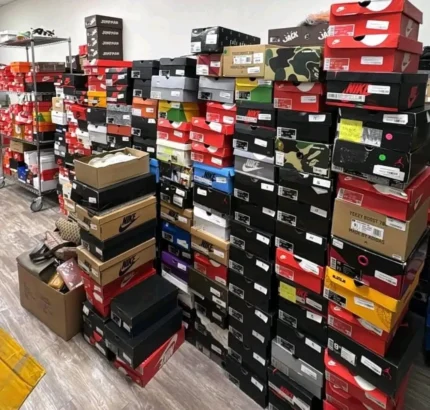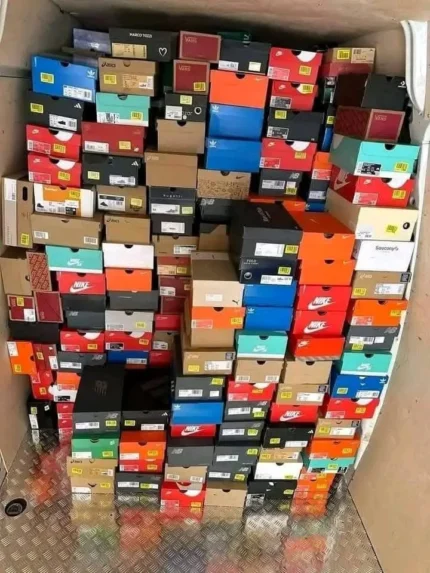

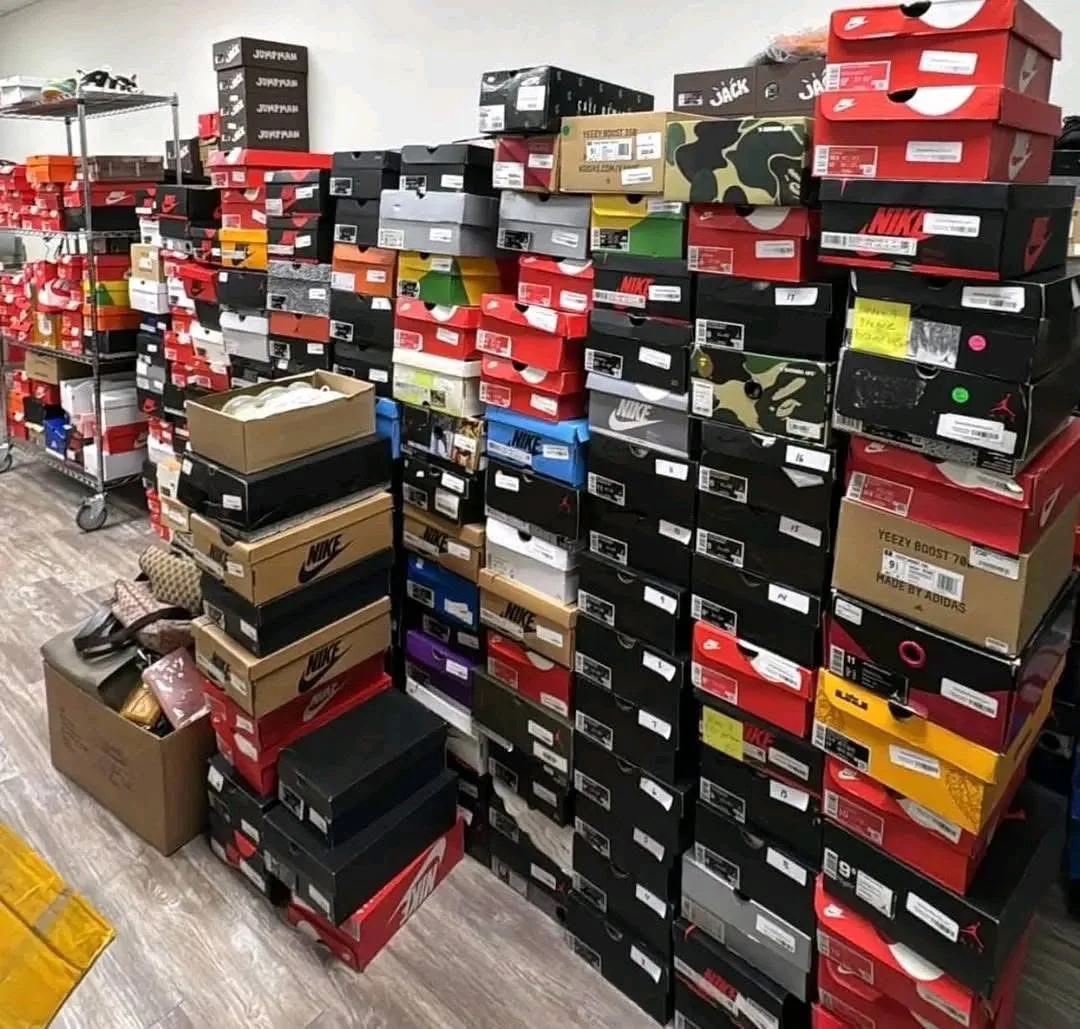
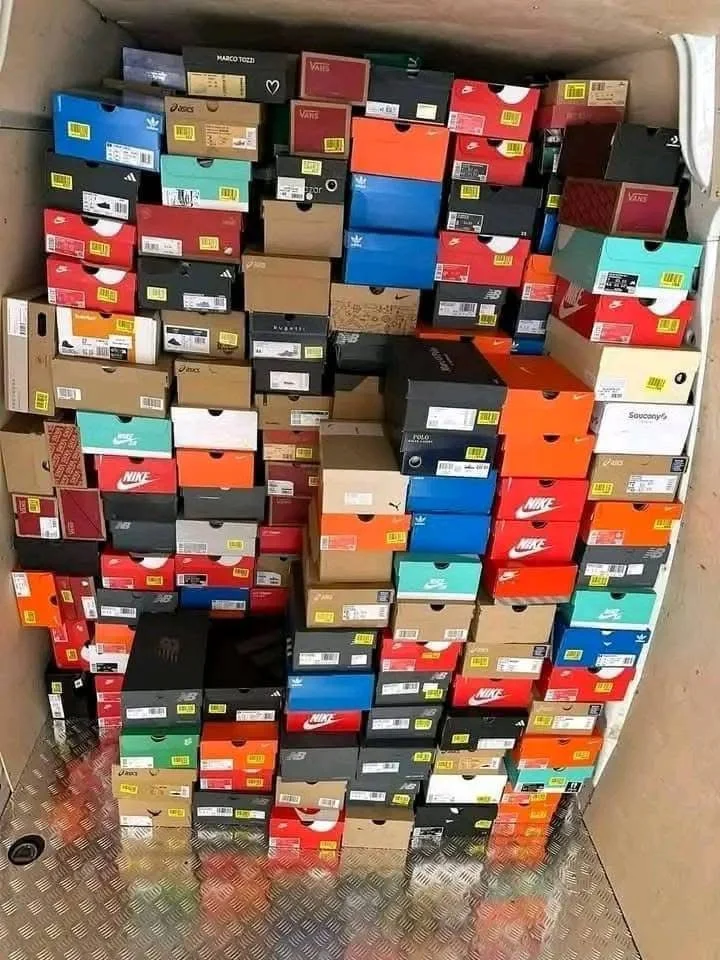
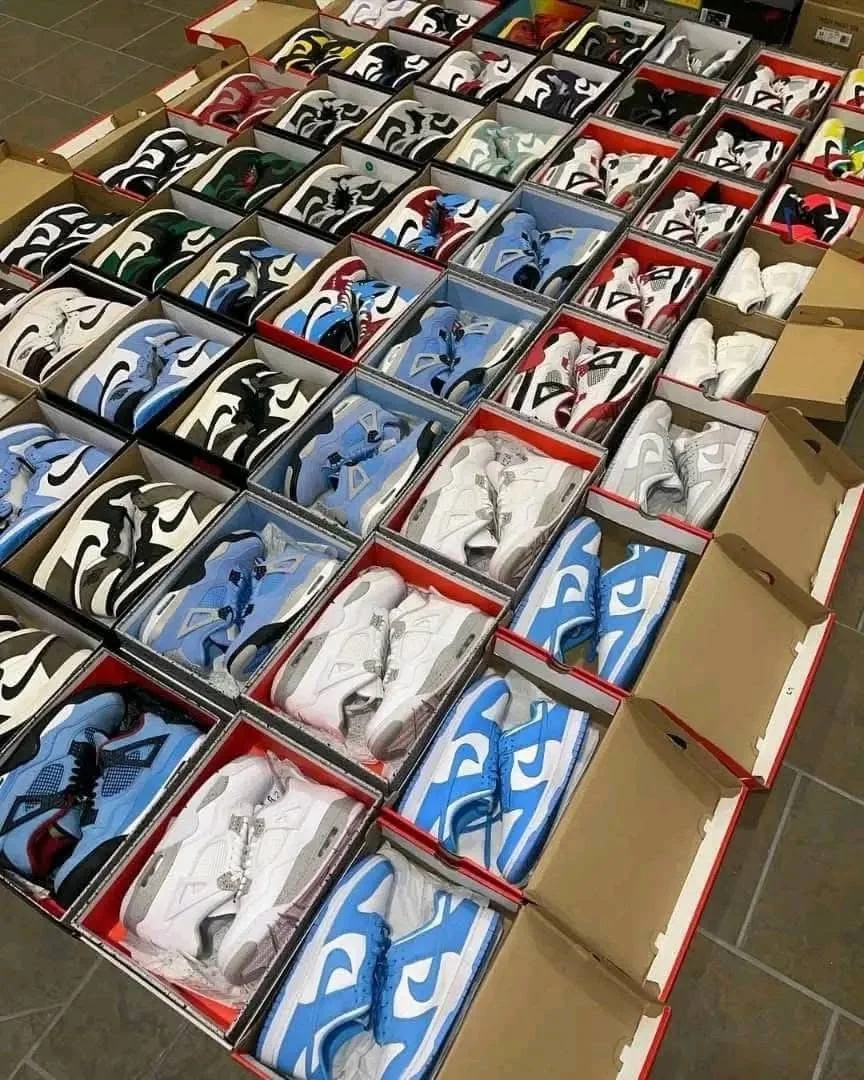
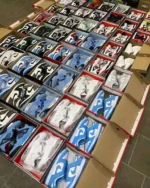
Wholesale Mixed Shoes Pallet (100 Pairs)
$600.00
Pallets of Shoes for Sale: Complete Guide to Wholesale Shoe Pallets
The search for pallets of shoes for sale has become increasingly popular among retailers, online sellers, discount stores, boutique owners, flea-market vendors, exporters, and entrepreneurs looking for affordable footwear inventory. Buying shoes in bulk can provide access to a wide variety of products while giving businesses the opportunity to build a substantial inventory through a single wholesale purchase.
A footwear pallet can contain different brands, sizes, styles, colors, and product categories. Depending on the supplier and the type of liquidation inventory, a pallet may consist of new overstock, shelf pulls, customer returns, excess inventory, or mixed-condition merchandise. Because the contents of every lot can vary, buyers should evaluate the actual inventory rather than relying solely on the pallet description. Recent wholesale listings show examples of 100-pair mixed shoe pallets containing assorted sizes and styles, with some listings providing manifests for buyers to review.
For businesses, the opportunity is straightforward: acquire footwear at a competitive bulk price, organize the inventory, price it appropriately, and sell through suitable retail channels.
However, profitable wholesale footwear sourcing requires more than finding the cheapest pallet. Buyers should consider product condition, authenticity, size distribution, brand mix, shipping expenses, storage, market demand, and the percentage of inventory that can realistically be resold.
Why Buy Pallets of Shoes for Resale? 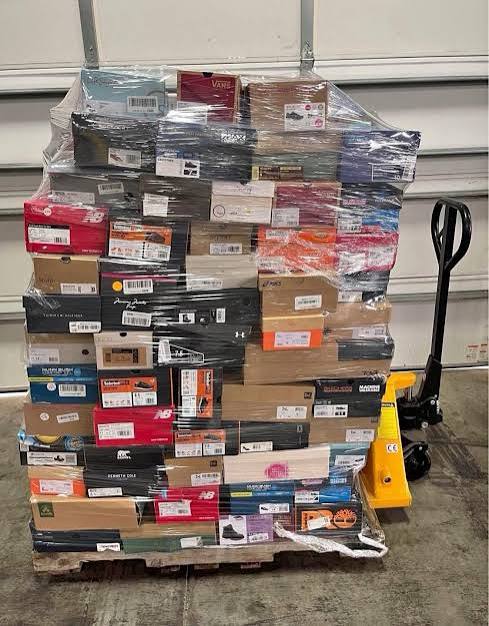
One of the biggest advantages of purchasing pallets of shoes for sale is the ability to acquire inventory in bulk. Instead of negotiating for individual pairs, a retailer can purchase an entire lot and immediately gain access to multiple products.
A mixed pallet can be especially useful for businesses that want variety. A typical mixed lot may contain men’s, women’s, and children’s footwear in different styles and sizes. Current wholesale listings demonstrate how 100-pair mixed pallets can include multiple categories and brands, depending on the supplier and specific lot.
This variety can help a retailer serve different customer groups.
For example, a physical discount store may display athletic shoes, casual sneakers, sandals, boots, and children’s footwear in separate sections. An online seller can create individual product listings from the same pallet. A flea-market vendor may sell selected pairs individually or create promotional bundles.
The key is to have a resale plan before purchasing.
Wholesale Mixed Shoes Pallet (100 Pairs)
A Wholesale Mixed Shoes Pallet (100 Pairs) is a popular format for businesses that want a manageable quantity of footwear without committing to a full truckload.
A 100-pair pallet can provide enough inventory to test a new footwear category, expand an existing store, or establish an online resale operation. Current wholesale listings show 100-pair pallets marketed toward online resellers, boutiques, discount stores, and wholesale buyers, with some listings describing new or overstock conditions and mixed sizes and styles.
Before purchasing a Wholesale Mixed Shoes Pallet (100 Pairs), ask the supplier for as much information as possible.
Important questions include:
- How many pairs are included?
- Are all pairs complete and matched?
- What brands are represented?
- What sizes are included?
- Are men’s, women’s, and children’s shoes mixed?
- Are the shoes new, overstock, shelf pulls, or returns?
- Are original boxes included?
- Is a manifest available?
- Are photographs of the actual pallet available?
- How much does shipping cost?
- What is the supplier’s return or dispute policy?
- Can the supplier provide sourcing information?
A pallet advertised as “100 pairs” should not be evaluated only on quantity. The usefulness of those 100 pairs depends heavily on the condition and assortment.
What Is a Pallet of Shoes for Sale?
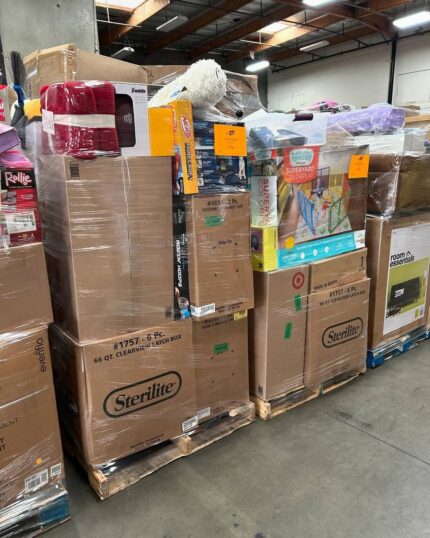
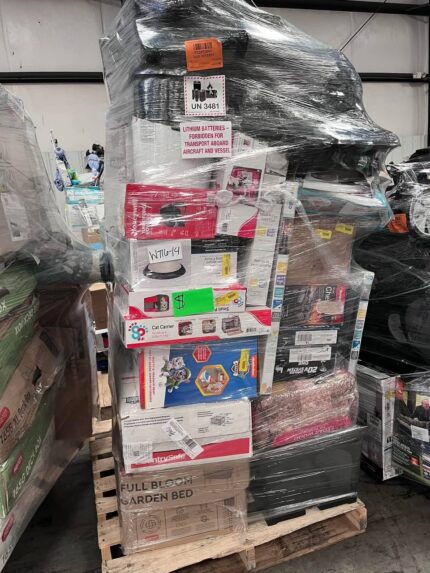
A pallet of shoes for sale is a bulk lot of footwear packaged and sold as one wholesale inventory unit. The inventory can originate from retailers, manufacturers, distributors, warehouses, overstock programs, returns, closeouts, or liquidation channels.
Different suppliers use different grading systems. Some pallets contain new merchandise, while others contain mixed-condition products. Some listings provide detailed manifests, while others rely primarily on photographs and general descriptions.
That difference is important.
A buyer purchasing new overstock footwear should have different expectations from someone purchasing an uninspected customer-return pallet.
For this reason, condition should always be established before payment.
New, Overstock, Returns, and Mixed Inventory
New and overstock shoes may be easier to resell because they generally require less preparation.
Customer-return footwear requires more inspection. Shoes may be unworn, lightly tried on, worn, damaged, missing packaging, or incomplete.
Mixed-condition inventory can still be profitable, but the buyer must price it accordingly.
A recent footwear sourcing guide notes that liquidation shoe lots can originate from overstock, shelf pulls, and customer returns, and emphasizes that condition grading and supplier evaluation are important parts of the purchasing process.
The lesson is simple: never calculate expected profit using the assumption that every pair will sell at the same price.
Liquidation Shoes Pallets
liquidation shoes pallets are designed for buyers looking to acquire footwear inventory that is being cleared from a retailer, warehouse, distributor, or other inventory source.
Liquidation can create opportunities because products may be priced below conventional wholesale or retail levels. However, liquidation merchandise can also involve greater uncertainty.
The exact contents may vary by pallet. A mixed load may contain different brands, sizes, colors, and styles. Some pallets may be manifested, while others may provide only a general description.
A current wholesale shoe-pallet listing, for example, identifies its inventory as mixed condition and explains that the lot is sourced from national retailer and manufacturer liquidation, while its estimated retail value is presented as a signal rather than a guaranteed resale amount.
That distinction is extremely important.
An “estimated retail value” should never be treated as guaranteed revenue.
How to Evaluate Liquidation Shoes Pallets
Before purchasing liquidation shoes pallets, evaluate five major factors:
Condition: Determine whether the shoes are new, overstock, returns, shelf pulls, or mixed.
Brand mix: Identify whether the pallet contains recognizable brands or primarily generic footwear.
Size distribution: A pallet with commercially useful sizes may be easier to sell than one dominated by uncommon sizes.
Completeness: Confirm that every pair is complete and wearable.
Landed cost: Calculate the pallet price plus freight, handling, taxes, duties, and other expenses.
The landed cost is the number that should guide your resale strategy.
How to Buy Pallets of Shoes
If you want to buy pallets of shoes, start by identifying the type of inventory that fits your business.
A beginner may want a smaller mixed pallet to test demand. An established retailer may prefer several pallets containing a more focused brand or category. An exporter may prioritize quantity and shipping efficiency.
Do not purchase a pallet simply because the advertised price appears low.
For example, imagine a hypothetical 100-pair pallet priced at $800. If freight costs $300, your total acquisition cost is $1,100.
That means the average landed cost is:
$1,100 ÷ 100 = $11 per pair
Now suppose 10 pairs are damaged or otherwise unsellable. Your effective cost becomes:
$1,100 ÷ 90 = approximately $12.22 per sellable pair
This is why condition and completeness matter.
Calculate the Real Cost Before Ordering
Your calculation should include:
Pallet price + freight + handling + taxes/duties + preparation costs = total acquisition cost
Then divide the result by the number of genuinely sellable pairs.
This gives you a realistic average cost.
You should then estimate your selling expenses, including marketplace fees, payment processing, packaging, shipping subsidies, advertising, storage, returns, and discounts.
A product that appears profitable at first glance can become far less attractive after all costs are included.
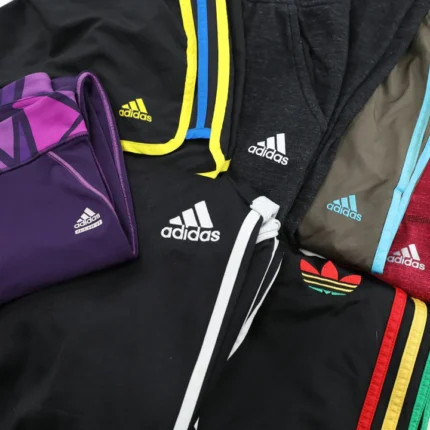
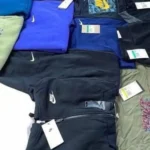
Nike Clothes Pallets for Sale
The search for nike clothes pallets for sale reflects demand for branded apparel inventory alongside footwear.
Although shoe pallets are focused primarily on footwear, businesses sometimes purchase mixed apparel and footwear inventory to create a broader fashion assortment.
Nike clothing can include T-shirts, sweatshirts, hoodies, sweatpants, jackets, shorts, and athletic apparel. A retailer selling both footwear and apparel can potentially create complete outfit combinations rather than selling shoes independently.
However, branded apparel should be evaluated with the same level of care as branded footwear.
Verify the product condition, sizing, tags, SKU information, and sourcing documentation. Avoid assuming that a wholesale listing is officially connected to Nike unless that relationship is independently verifiable.
Combining Shoes and Apparel
A business can use footwear as the foundation of an apparel operation.
For example, athletic shoes can be displayed alongside:
- Performance T-shirts
- Hoodies
- Sweatpants
- Athletic shorts
- Jackets
- Socks
- Sports accessories
This can increase the number of products available to customers and create opportunities for cross-selling.
However, businesses should track footwear and apparel separately in their inventory system because their sizing, storage requirements, return patterns, and pricing structures differ.
Choosing the Right Shoe Categories
A mixed pallet can contain many different footwear types.
Common categories include:
- Sneakers
- Running shoes
- Athletic shoes
- Casual shoes
- Boots
- Sandals
- Slides
- Children’s footwear
- Women’s footwear
- Men’s footwear
Each category attracts a different customer.
Athletic shoes may appeal to fitness customers. Fashion sneakers may attract streetwear shoppers. Children’s footwear can be useful for family-oriented retailers. Sandals and lighter footwear may perform differently depending on season and market.
A retailer should therefore organize the pallet immediately after receiving it.
Inspecting Shoes Before Resale
Inspection is one of the most important steps when working with wholesale footwear.
Every pair should be checked for:
- Matching left and right shoes
- Correct size
- Visible damage
- Stains
- Scuffs
- Sole condition
- Loose stitching
- Missing laces
- Missing accessories
- Packaging condition
- Product labels
- Signs of wear
If a shoe is visibly worn, do not describe it as new.
Transparency protects your reputation and reduces customer complaints.
For online sellers, photograph each product clearly. Show the exterior, sole, labels, box, and any noticeable imperfections.
Managing Sizes in a Shoe Pallet
Footwear has one major advantage over many other liquidation categories: every pair has a clearly defined size.
However, size distribution can also become a challenge.
A pallet with 100 pairs may contain many sizes, but that does not mean every size will sell at the same speed.
Track your sales by size.
If certain sizes consistently sell first, use that data to influence future purchasing decisions.
For children’s footwear, record age or size categories accurately. For men’s and women’s shoes, use the correct sizing system and clearly identify whether the product uses U.S., U.K., or another sizing standard when relevant.
How to Price Pallets of Shoes Inventory
Pricing should be based on product-specific market research.
Do not give every shoe in the pallet the same selling price.
Instead, divide the inventory into categories.
Premium products: Higher-demand branded or desirable shoes can receive higher prices.
Standard products: Everyday shoes can be priced competitively based on comparable listings.
Lower-value products: Slow-moving or less desirable products may be discounted or bundled.
Damaged products: These should be disclosed accurately and priced according to their condition.
This approach allows a retailer to maximize the value of the pallet instead of treating every pair identically.
Create a Resale Pricing Matrix
A simple spreadsheet can include:
| Product | Brand | Size | Condition | Cost | Target Price | Actual Sale Price |
|---|---|---|---|---|---|---|
| Sneaker A | Brand | 9 | New | $12 | $35 | $32 |
| Sneaker B | Brand | 10 | Overstock | $12 | $40 | $38 |
| Shoe C | Brand | 8 | Return | $12 | $25 | $22 |
This information helps you determine which categories are actually profitable.
Over time, your own sales data can become one of your most valuable sourcing tools.
Where to Sell Wholesale Shoe Inventory
Once you buy pallets of shoes, you need a clear strategy for moving the inventory.
Possible channels include:
- Your own ecommerce website
- Online marketplaces
- Social-commerce platforms
- Physical retail stores
- Discount shops
- Flea markets
- Pop-up stores
- Local footwear businesses
- Export markets
Each channel has different costs and customer expectations.
Online sales require strong product photography and accurate descriptions. Physical retail allows customers to try shoes on but requires store space and merchandising.
Flea markets can be useful for moving lower-cost footwear quickly, while an online store may be better for specific branded models.
Common Mistakes When Buying Shoe Pallets
One of the biggest mistakes is focusing only on the advertised retail value.
A supplier may state that a pallet contains a large estimated retail value, but this does not guarantee that the buyer will sell every item at that amount.
Another common mistake is ignoring freight.
A pallet can look inexpensive until shipping is added.
Buyers should also avoid assuming that photographs represent every item in the shipment. Unless the supplier confirms that the photographs show the exact lot, ask whether they are representative images.
Finally, never ignore authenticity when purchasing branded footwear.
If a supplier cannot clearly explain the sourcing of branded products, proceed cautiously.
Building a Profitable Shoe Resale Business
A successful footwear business is built on repeatable processes.
First, develop reliable sourcing criteria.
Second, inspect every shipment.
Third, organize inventory immediately.
Fourth, photograph and list products accurately.
Fifth, monitor which sizes, brands, and categories sell fastest.
Sixth, use that information to improve future purchasing.
This process turns a pallet from a simple bulk purchase into a structured inventory strategy.
Businesses should also avoid purchasing more inventory than they can store or sell. A cheap pallet is not a good investment if it remains in storage for months without generating revenue.
Conclusion: Finding the Best Pallets of Shoes for Sale
The market for pallets of shoes for sale offers opportunities for retailers, resellers, discount stores, online sellers, and entrepreneurs seeking affordable bulk footwear inventory.
A Wholesale Mixed Shoes Pallet (100 Pairs) can be an efficient starting point because it provides a substantial quantity of footwear while allowing a business to test multiple styles, sizes, and customer segments. Current wholesale listings show that 100-pair mixed shoe pallets can be offered in different conditions and assortments, reinforcing the importance of checking the exact lot before purchase.
Whether you are searching for a pallet of shoes for sale, comparing liquidation shoes pallets, preparing to buy pallets of shoes, or researching nike clothes pallets for sale, the same principles apply: verify the merchandise, understand the condition, inspect the inventory, calculate the landed cost, and develop a realistic resale plan.
The most successful wholesale footwear buyers do not simply chase the lowest price. They look for useful inventory, reliable sourcing, commercially valuable sizes, manageable shipping costs, and products that match their customers.
When you combine careful sourcing with organized inventory management, accurate product listings, competitive pricing, and consistent customer service, buying shoe pallets can become a scalable and profitable component of a larger retail or resale business.